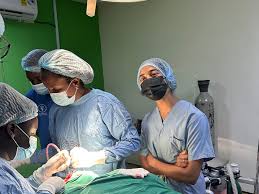
Introduction to Pharmacy Education in Nigeria
Pharmacy is a vital profession in Nigeria’s healthcare system, focusing on the discovery, development, production, and dispensation of medications. Pharmacists play a crucial role in patient care, drug research, and public health initiatives, especially in a country facing challenges like infectious diseases, counterfeit drugs, and access to quality healthcare. The demand for skilled pharmacists has grown with the expansion of the pharmaceutical industry and the need for better drug regulation.
In Nigeria, pharmacy education is regulated by the Pharmacy Council of Nigeria (PCN), which accredits programs to ensure they meet international standards. The journey to becoming a pharmacist typically involves a five-year Bachelor of Pharmacy (B.Pharm) degree or a six-year Doctor of Pharmacy (Pharm.D) program, followed by a one-year internship and licensing exams. Many universities have transitioned to the Pharm.D to align with global practices, emphasizing clinical skills alongside traditional pharmaceutical sciences.
Choosing the right university is essential for aspiring pharmacists. Factors like accreditation, faculty expertise, facilities, research opportunities, and cut-off marks influence admission success. This article explores universities offering pharmacy in Nigeria, their requirements, and cut-off marks based on recent data (up to 2025/2026 sessions). Cut-off marks refer to both JAMB UTME minimums (generally 140 for universities, but higher for competitive courses like pharmacy) and departmental aggregates, which combine JAMB scores, Post-UTME, and O’Level results. We prioritize top-ranked institutions from sources like EduRank and PositiveNaija, while ensuring comprehensive coverage.
Nigeria has over 20 PCN-accredited universities offering pharmacy, with programs designed to produce graduates who can contribute to drug manufacturing, clinical practice, and research. The field is competitive, with high cut-off marks reflecting the rigor of the curriculum. In the following sections, we’ll break down general admission requirements before diving into specific universities.
General Admission Requirements for Pharmacy in Nigeria
To study pharmacy in Nigeria, candidates must meet standardized requirements set by the Joint Admissions and Matriculation Board (JAMB) and individual universities. These ensure students have the foundational knowledge in sciences needed for the program.
O’Level Requirements
Candidates need at least five credit passes in the Senior Secondary Certificate Examination (SSCE) or equivalent, obtained in not more than two sittings. Essential subjects include:
- English Language
- Mathematics
- Physics
- Chemistry
- Biology
These must be from exams like WAEC, NECO, or GCE. Some universities, like the University of Nigeria Nsukka (UNN), emphasize credits in these subjects for the five-year B.Pharm program.
UTME (JAMB) Requirements
In the Unified Tertiary Matriculation Examination (UTME), candidates must select:
- English Language (compulsory)
- Physics
- Chemistry
- Biology
The national JAMB cut-off for universities is 140, but for pharmacy, most institutions require 200 or higher due to competition. Scoring below this often disqualifies candidates from Post-UTME screening.
Direct Entry Requirements
For Direct Entry (DE), candidates with A’Levels, OND, HND, or BSc in related fields can apply. Requirements include:
- Two A’Level passes in Chemistry, Biology, and Physics/Mathematics.
- Or a relevant diploma with upper credit.
DE candidates bypass the first year in some programs.
Post-UTME and Aggregate Cut-Offs
After UTME, universities conduct Post-UTME exams or screenings. The aggregate score (50% UTME + 50% Post-UTME or similar formulas) determines final admission. For pharmacy, aggregates often range from 60-80, depending on the institution.
Additional tips: Prepare for competitive entrance exams, as spots are limited. PCN accreditation is non-negotiable unaccredited programs won’t lead to licensing.
Top Universities Offering Pharmacy in Nigeria
Below, we detail leading universities, ranked based on academic reputation, research output, and facilities. Each includes specific requirements and cut-off marks where available (note: cut-offs vary yearly; use as guides).
1. University of Ibadan (UI), Ibadan
The University of Ibadan, established in 1948, is Nigeria’s oldest university and a top choice for pharmacy. Its Faculty of Pharmacy has a rich history of producing leaders in the field.

History and Programs: Founded as part of the College of Medicine, it offers B.Pharm and Pharm.D, with postgraduate options in pharmacology, pharmaceutics, and clinical pharmacy. The Pharm.D emphasizes patient care.
Admission Requirements: Standard O’Level credits plus UTME subjects. Direct Entry accepts A’Levels in sciences.
Cut-Off Marks: JAMB minimum 200; 2025 aggregate merit cut-off for pharmacy is 68 (out of 100, combining UTME and Post-UTME).
Facilities: Modern labs for drug analysis, herbal research, and clinical simulations. The faculty collaborates with international bodies for research.
Notable Aspects: Ranked #1 for pharmacy in Nigeria by EduRank. Graduates excel in industry and academia. Why choose UI? Prestigious alumni network and focus on research-driven education.
2. University of Nigeria Nsukka (UNN)

UNN, founded in 1960, is renowned for its pharmaceutical sciences faculty in the southeast.
History and Programs: Started as a department in 1967, it became a faculty producing over 4,000 B.Pharm graduates. Offers B.Pharm, Pharm.D, and B.Sc in Combined Pharmacology/Biochemistry. Postgraduate includes MSc/PhD in various specializations.
Admission Requirements: Five O’Level credits including English, Math, Physics, Chemistry, Biology. UTME: English, Physics, Chemistry, Biology.
Cut-Off Marks: JAMB 180 minimum; pharmacy aggregate around 286-290 for merit (2024/2025 data).
Facilities: Advanced labs for toxicology, pharmacognosy, and drug development. Research centers focus on herbal medicines.
Notable Aspects: Pioneered Pharm.D in Nigeria. Emphasizes innovation in healthcare. Ideal for students interested in research and community pharmacy.
3. Obafemi Awolowo University (OAU), Ile-Ife
OAU, established in 1962, boasts a strong pharmacy faculty known for excellence.
History and Programs: The faculty offers B.Pharm and Pharm.D, with departments in clinical pharmacy, pharmaceutics, and pharmacognosy. Postgraduate programs in drug research.
Admission Requirements: O’Level: Five credits in sciences. UTME: English, Physics, Chemistry, Biology. Direct Entry: B.Sc in related fields or A’Levels.
Cut-Off Marks: JAMB 200; aggregate for pharmacy around 256.5 (recent sessions).
Facilities: Well-equipped labs for formulation and analysis, herbal gardens for pharmacognosy studies.
Notable Aspects: Ranked #3 nationally. Focuses on African traditional medicine integration. Strong emphasis on ethics and professional development.
4. University of Lagos (UNILAG)

UNILAG’s Faculty of Pharmacy is a hub for urban healthcare education.
History and Programs: Began as a School of Pharmacy in 1980, now offers B.Pharm, Pharm.D, MSc, and PhD across five departments.
Admission Requirements: Standard O’Level and UTME. Competitive Post-UTME.
Cut-Off Marks: JAMB 200; 2025 aggregate merit 75.65.
Facilities: GMP facility, computational research unit, drug information center.
Notable Aspects: 95% PUTME success rate, international grants. Graduates win awards like Rhodes Scholarship.
5. Ahmadu Bello University (ABU), Zaria
ABU, in northern Nigeria, is a leader in pharmaceutical research.
History and Programs: Offers B.Pharm and Pharm.D, with focus on industrial pharmacy.
Admission Requirements: Five O’Level credits, UTME sciences.
Cut-Off Marks: JAMB 180-200; pharmacy around 200.
Facilities: Labs for microbiology and chemistry.
Notable Aspects: Ranked highly; strong in northern healthcare issues like tropical diseases.
6. University of Benin (UNIBEN)
UNIBEN emphasizes practical training.
History and Programs: B.Pharm and Pharm.D programs.
Admission Requirements: Standard requirements.
Cut-Off Marks: JAMB 200; aggregate 65 for pharmacy.
Facilities: Clinical labs.
Notable Aspects: Focus on ethics and community service.
7. University of Jos (UNIJOS)
UNIJOS offers innovative programs.
History and Programs: Doctor of Pharmacy, B.Sc Pharmacology.
Admission Requirements: O’Level sciences.
Cut-Off Marks: JAMB 180; Pharm.D 230.
Facilities: Research centers.
Notable Aspects: Addresses plateau region health needs.
8. University of Ilorin (UNILORIN)
UNILORIN is known for discipline.
History and Programs: B.Pharm/Pharm.D across six departments.
Admission Requirements: Five credits.
Cut-Off Marks: JAMB 180; pharmacy 230+.
Facilities: Labs for toxicology.
Notable Aspects: Research on public health.
9. Bayero University Kano (BUK)
BUK serves northern needs.
History and Programs: Doctor of Pharmacy.
Admission Requirements: Standard.
Cut-Off Marks: JAMB 160; Pharm.D 220.
Facilities: Biotechnology labs.
Notable Aspects: Focus on Islamic medicine integration.
10. University of Port Harcourt (UNIPORT)
UNIPORT excels in toxicology.
History and Programs: B.Pharm, MSc/PhD in toxicology.
Admission Requirements: Five credits.
Cut-Off Marks: JAMB 150; pharmacy 230.
Facilities: Phytomedicine lab.
Notable Aspects: First African toxicology graduate program; WHO collaborations.
Other Accredited Universities
Beyond the top 10, others include University of Uyo, Niger Delta University, Madonna University, and Igbinedion University. Private options like Bingham and Afe Babalola offer smaller classes.
Career Prospects and Tips
Pharmacy graduates can work in hospitals, industries, research, or regulation. Average salary starts at ₦150,000-₦300,000 monthly. Tips: Aim high in JAMB, prepare for Post-UTME, consider DE if eligible.
FAQs
- What is the JAMB cut-off for pharmacy? Generally 200+.
- Is Pharm.D better than B.Pharm? Pharm.D is more clinical-focused.
- How long is pharmacy school? 5-6 years.
Conclusion
Choosing a university for pharmacy in Nigeria requires considering accreditation, facilities, and cut-offs. Top institutions like UI and UNN provide excellent foundations. Research thoroughly and prepare diligently for success in this rewarding field.