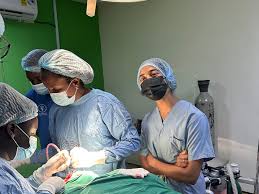
Studying Medicine and Surgery in Nigeria is a rigorous yet rewarding pursuit, offering aspiring doctors the opportunity to contribute to one of the world’s most dynamic healthcare systems. With a growing population and evolving health challenges, the demand for skilled medical professionals remains high. Choosing the right university is crucial, as it influences not only the quality of education but also clinical exposure, research opportunities, and career prospects. In Nigeria, Medicine and Surgery programs lead to the award of the Bachelor of Medicine, Bachelor of Surgery (MBBS) degree, typically spanning six years, including preclinical and clinical phases.
This article explores the best universities for studying Medicine and Surgery in Nigeria, based on comprehensive evaluations from reputable sources such as Times Higher Education (THE) rankings, US News & World Report, Edurank, and Scimago Institutions Rankings. These institutions were selected using criteria like academic reputation, research output, faculty expertise, infrastructure, accreditation by the Medical and Dental Council of Nigeria (MDCN), student outcomes, and global recognition. Factors such as admission competitiveness, cut-off marks, and alumni achievements were also considered. Note that while JAMB sets a general minimum UTME score of 150 for universities in 2026, Medicine and Surgery programs often require scores of 250-300 or higher due to high demand.
We’ll break down each university in detail, covering history, program structure, admission requirements, facilities, notable alumni, and research highlights. This guide aims to provide prospective students with in-depth insights to make informed decisions.
Criteria for Ranking the Best Universities
To determine the top universities, we analyzed multiple ranking systems and qualitative factors:
- Academic and Research Excellence: Based on publications, citations, and innovation in medical research, as per Scimago and Edurank metrics.
- Infrastructure and Facilities: Access to teaching hospitals, laboratories, and simulation centers.
- Accreditation and Quota: Full MDCN accreditation and approved student intake quotas.
- Admission Competitiveness: High JAMB cut-off marks and post-UTME performance requirements.
- Alumni Success: Contributions to healthcare, politics, and academia.
- Global and National Rankings: Positions in THE 2026 rankings, US News for Clinical Medicine, and Nigerian-specific evaluations.
These criteria ensure the selected universities offer holistic training, preparing graduates for residency, specialization, or international practice.
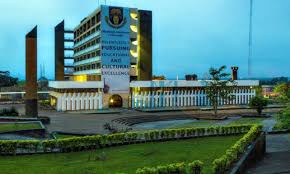
1. University of Ibadan (UI)
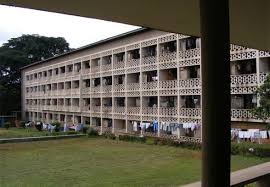
The University of Ibadan, established in 1948 as Nigeria’s first university, consistently ranks as the top institution for Medicine and Surgery. Its College of Medicine (CoMUI), founded in the same year, is a pioneer in medical education, initially affiliated with the University of London before gaining independence in 1962. The college has produced over 7,000 MBBS graduates and emphasizes community-oriented training.
Program Structure
The MBBS program at UI spans six years: three years of preclinical studies (anatomy, physiology, biochemistry) and three years of clinical rotations in specialties like surgery, pediatrics, and obstetrics. Students engage in research projects and electives, with opportunities for intercalated degrees in basic medical sciences.
Admission Requirements
- O’Level: Five credits including English, Mathematics, Biology, Chemistry, and Physics in not more than two sittings (WAEC/NECO).
- UTME Subjects: English, Biology, Chemistry, Physics.
- JAMB Cut-Off: Typically 270-300 for Medicine; 2026 estimates align with this based on previous trends.
- Post-UTME: Screening involves aptitude tests and interviews; aggregate score must exceed departmental threshold (around 70%).
- Direct Entry: A’Level passes in Biology, Chemistry, Physics, or a relevant BSc with a minimum 2:1.
Facilities
UI’s University College Hospital (UCH), a 1,000-bed tertiary facility, provides hands-on training with specialized units in cardiology, neurology, and oncology. The college features modern labs, a medical library with over 100,000 volumes, simulation centers for procedural training, and research institutes like the Institute of Advanced Medical Research and Training (IAMRAT).
Notable Alumni
UI boasts luminaries such as Dr. Olufunmilayo Olopade (cancer researcher and MacArthur Fellow), Dr. Babatunde Osotimehin (former UNFPA Executive Director), and Prof. Isaac Adewole (former Nigerian Health Minister). These alumni have advanced global health initiatives and policy.
Research Achievements
In 2026 rankings, UI leads in clinical medicine research with over 300 publications annually on tropical diseases, genomics, and public health. Recent achievements include breakthroughs in malaria vaccine trials and COVID-19 epidemiology studies, funded by WHO and NIH. The college’s research output scores highly in Scimago metrics, contributing to Nigeria’s health policy.
UI’s program is ideal for students seeking a research-intensive environment, though admission is highly competitive with only about 180 slots annually.
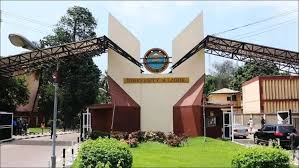
2. University of Lagos (UNILAG)
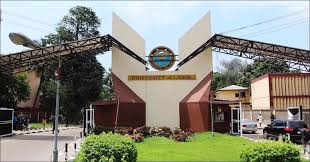
Founded in 1962, the University of Lagos is renowned for its urban location and strong medical program. The College of Medicine (CMUL), established in 1962, is integrated with the Lagos University Teaching Hospital (LUTH), making it a hub for clinical excellence in southern Nigeria.
Program Structure
The six-year MBBS curriculum includes foundational sciences in years 1-3 and clinical clerkships in years 4-6, with emphasis on urban health issues like infectious diseases and trauma. Elective options include international rotations.
Admission Requirements
- O’Level: Five credits in English, Mathematics, Biology, Chemistry, Physics.
- UTME Subjects: Same as UI.
- JAMB Cut-Off: 270-290; highly competitive.
- Post-UTME: Aggregates from UTME, O’Levels, and screening; minimum 65% required.
- Direct Entry: Similar to UI, with BSc options.
Facilities
LUTH, with 761 beds, offers advanced facilities in radiology, neurosurgery, and emergency medicine. CMUL includes simulation labs, a molecular diagnostics center, and a health informatics unit.
Notable Alumni
Alumni include Dr. Stella Adadevoh (Ebola hero), Prof. Oyewusi Ibidapo-Obe (former VC), and Dr. Ngozi Okonjo-Iweala (WTO Director-General, with medical roots). They exemplify leadership in health and economics.
Research Achievements
Ranked highly in THE 2026 for medical subjects, CMUL excels in oncology and infectious disease research. Achievements include HIV/AIDS studies and telemedicine innovations, with collaborations like the African Centre of Excellence for Genomics.
UNILAG suits students interested in urban medicine, with strong networking in Lagos’ healthcare ecosystem.
3. Obafemi Awolowo University (OAU)
Obafemi Awolowo University, established in 1962, features the College of Health Sciences (CHS), known for community health focus. The college, founded in 1971, trains holistic physicians.
Program Structure
MBBS program: Preclinical (years 1-3) covers basics; clinical (years 4-6) includes rural postings via Community Based Education and Service (COBES).
Admission Requirements
- O’Level/UTME: Standard sciences; cut-off 260-280.
- Post-UTME: High aggregate needed.
- Direct Entry: A’Levels or BSc.
Facilities
Obafemi Awolowo University Teaching Hospitals Complex (OAUTHC) has 600 beds, with specialties in orthopedics and pediatrics. CHS includes anatomy museums and research labs.
Notable Alumni
Include Prof. Eyitayo Lambo (former Health Minister) and Dr. Isaac Folorunso Adewole (health policy expert).
Research Achievements
Ranked in top 5 for medicine by Edurank; focuses on herbal medicine and epidemiology. Recent work on non-communicable diseases.
OAU emphasizes rural health, perfect for public health-oriented students.
4. University of Nigeria, Nsukka (UNN)
UNN, founded in 1960, has a College of Medicine dating to 1966, integrated with the University of Nigeria Teaching Hospital (UNTH).
Program Structure
Six-year MBBS with strong emphasis on cardiothoracic surgery.
Admission Requirements
- Standard O’Level/UTME; cut-off 250-280.
- Direct Entry available.
Facilities
UNTH, a center for tropical cardiology, has advanced ICUs and research units.
Notable Alumni
Dr. Ifeanyi Okowa (former Delta Governor) and Prof. Benjamin Ozumba (former VC).
Research Achievements
High in Africa rankings; research on endemic diseases.
UNN offers robust training in specialized medicine.
5. Ahmadu Bello University (ABU)
ABU, established in 1962, features the College of Medical Sciences, focused on northern health issues.
Program Structure
Standard MBBS with community medicine emphasis.
Admission Requirements
Cut-off 250-270.
Facilities
ABU Teaching Hospital (ABUTH) with 700 beds.
Notable Alumni
Dr. Mansur Muhtar (former Finance Minister).
Research Achievements
Patents in tropical medicine; ranked high in Scimago.
Ideal for northern-focused careers.
6. University of Ilorin (UNILORIN)
UNILORIN’s College of Health Sciences, established 1977, is known for stable academic calendar.
Program Structure
MBBS with integrated basic and clinical sciences.
Admission Requirements
Cut-off 250-280.
Facilities
University of Ilorin Teaching Hospital (UITH) with simulation labs.
Notable Alumni
Dr. Bukola Saraki (former Senate President).
Research Achievements
Active in public health; THE ranked.
UNILORIN provides uninterrupted learning.
7. University of Benin (UNIBEN)
UNIBEN’s College of Medical Sciences, founded 1973, links to UBTH.
Program Structure
MBBS with electives.
Admission Requirements
Cut-off 250-270.
Facilities
UBTH, a trauma center.
Notable Alumni
Dr. Osagie Ehanire (former Health Minister).
Research Achievements
Strong in reproductive health.
Suitable for south-south students.
8. Bayero University Kano (BUK)
BUK’s College of Health Sciences offers northern-oriented training.
Program Structure
MBBS with Islamic ethics integration.
Admission Requirements
Cut-off 240-270.
Facilities
Aminu Kano Teaching Hospital.
Notable Alumni
Mansur Dan Ali (Defense Minister).
Research Achievements
Focus on maternal health.
BUK addresses regional needs.
9. University of Jos (UNIJOS)
UNIJOS’s Faculty of Medical Sciences, upgraded to college in 2018.
Program Structure
MBBS with plateau-specific focus.
Admission Requirements
Cut-off 240-260.
Facilities
Jos University Teaching Hospital (JUTH).
Notable Alumni
Rt. Hon. Yakubu Dogara (former Speaker).
Research Achievements
High-altitude medicine studies.
UNIJOS suits central Nigeria aspirants.
10. University of Port Harcourt (UNIPORT)
Though not always top-listed, UNIPORT’s College of Health Sciences is strong in the south-south.
Program Structure
Standard MBBS.
Admission Requirements
Cut-off 250+.
Facilities
UPTH with oil-related health focus.
Notable Alumni
Health leaders in Niger Delta.
Research Achievements
Environmental health research.
UNIPORT is relevant for regional issues.
General Admission Tips for Medicine and Surgery
Beyond university-specific requirements, prepare for JAMB (aim 280+), post-UTME, and interviews. O’Levels must be strong. Direct entry suits degree holders.
Career Prospects After Graduation
MBBS graduates undertake housemanship, NYSC, then residency via NPMCN. Opportunities in hospitals, research, or abroad.
Conclusion
Nigeria’s top medical schools offer world-class training despite challenges. UI leads, but choose based on location and strengths. With dedication, you can excel.